Millions of people suffer from autoimmune diseases, and the number continues to rise. For most of these conditions, the exact cause remains unknown. However, viral infections are increasingly suspected to play a role in triggering autoimmunity.
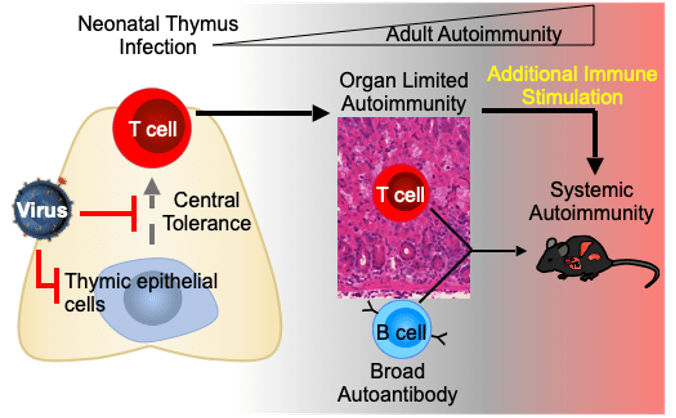
Despite this suspected link, direct evidence connecting viral infections to autoimmune disease is limited. Our research has uncovered that neonatal infection with roseolovirus can induce autoimmunity by disrupting the natural processes that prevent the development of autoreactive T and B cells. Early findings suggest this disruption is due to infection of the thymus.
Our research focus
Our lab is dedicated to uncovering how roseoloviruses lead to autoimmune disease. Specifically, we aim to:
- Understand the mechanisms by which roseoloviruses interfere with immune regulation.
- Investigate other thymus-targeting viruses to determine whether this disruption is unique to roseolovirus or a broader phenomenon.
- Explore long-term impacts of thymic infection on immune cell development and immune tolerance.
Using advanced immunologic tools and molecular virology, we are working to illuminate how viral infections shape immune responses and contribute to chronic disease.


